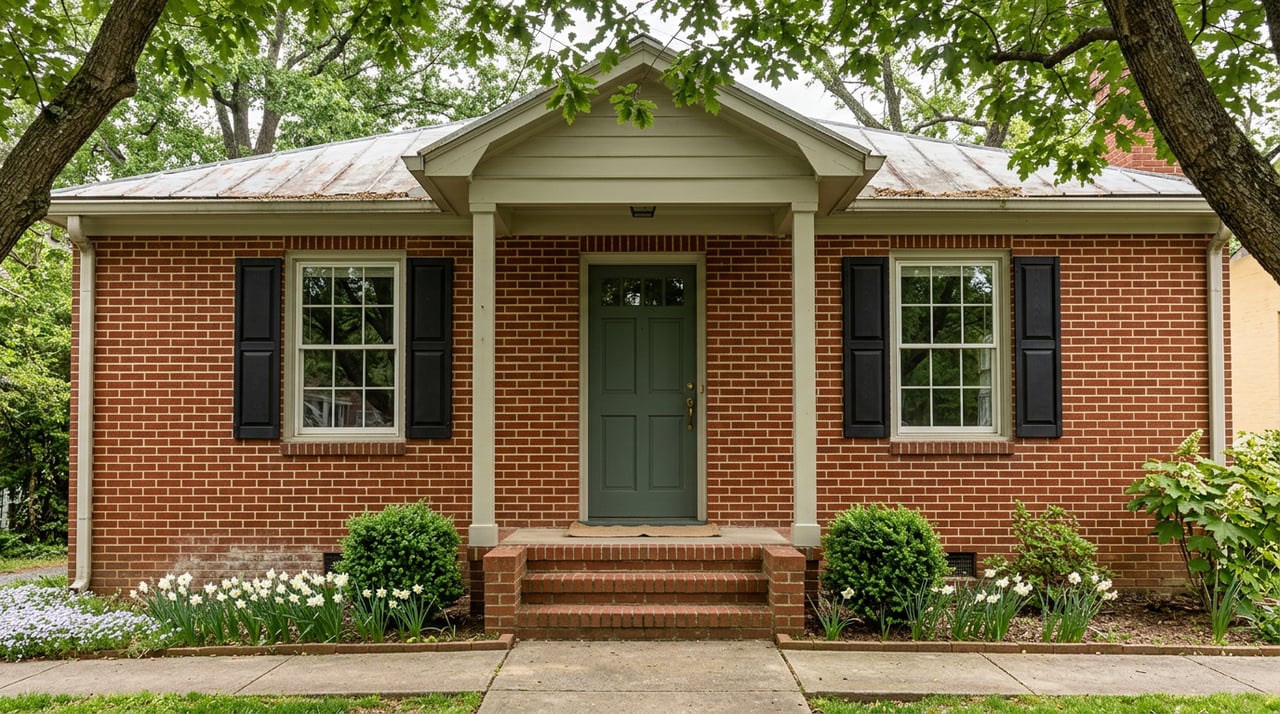
Walk down Parkway Drive on a weekday evening and you can read the neighborhood's whole argument in about fifteen minutes. The stone gateways at Highway 11 announce the district. Oak canopies close over the sidewalks. The Mall opens up green in the middle, and if it's the right week in October, you'll see volunteers on hands and knees planting the next stretch of daffodils. This isn't a preservation exhibit. It's a working 1930s village where the civic layer is expanding faster than most of the newer subdivisions on the other side of Chalkville Mountain.
That's the thesis worth holding onto: the Cahaba Project is denser with things to do, per acre, than it looks from a car window. You just have to know which corners are being worked on.
The map you're actually living on
The bones of the neighborhood are federal. Cahaba Homestead Village was constructed between 1936 and 1938 by the Resettlement Administration on the site of the original Trussville Furnace, and was originally called "Slagheap Village" because of the large slag piles covering the site. It's roughly bounded by Rockridge Avenue to the west, the Cahaba River to the east, Gadsden Highway to the south, and Poplar Street to the north, with North Chalkville Road running through the heart of the development and tall oaks lining the sidewalks.
That layout was not accidental. The village was intended to be a model garden-type suburban town, and architect D. H. Greer employed the community planning formula used in federal public housing projects between 1933 and 1949: a formal arrangement of residential units, a prominently located community building, open public and recreational space, traffic circulation patterns, and private garden spaces. Nearly ninety years later, that formula is what makes an evening walk here different from an evening walk in a 2005 cul-de-sac. The Mall in the middle is not a leftover green strip. It's the center of the plan, and it still functions that way.
Two hundred and seventy-three twentieth-century residential buildings are located within the district, and two hundred and sixty-four of them are considered contributing resources.
Read that again. Almost every house you pass is part of the historic record. That is the density of story you're living inside.
What the Foundation is actually building
The Cahaba Homestead Heritage Foundation was incorporated in 2021 and has been busy. Its long-range program, Cahaba 100, is a set of projects timed to the neighborhood's centennial years of 2036 through 2038. If you've been wondering who's behind the new sandstone at the corner of Parkway Drive and Highway 11, or the fresh mortar work on older stonework, this is the answer.
Concrete pieces already delivered or underway:
- Stone Gateways at the historic entrances. Completed December 2023 with a dedication in January 2024, the sandstone gateways read "Cahaba Homestead Village – National Register of Historic Places – Est. 1936-1938," were designed by Amy Peterson O'Brien to complement the original gazebo entrance at Parkway Drive and Highway 11, and were constructed by Trimm Landscaping LLC.
- The Daffodil Trail. Planting was slated for fall 2024 along main corridors and perimeter areas of the historic district including Parkway Drive, Poplar Street, and Rockridge Avenue with rows of daffodils and Alabama wildflowers, meant to serve as an annual reminder of the generations of school children tied to the historic school building.
- Ongoing masonry restoration. Work by Trimm Landscaping Co. as a Cahaba 100 project used new mortar matched to the lighter color of the original, which will age to match the original's patina, addressing cosmetic and structural cracking and loose stones.
- Foundation funding. The Foundation is a recipient of a $100,000 grant this year through the Alabama Historical Commission, which will enable it to address all areas of its mission.
If you've lived here five years and only noticed the daffodils, that's the point. The projects are meant to feel like they've always been there.
The week to circle every spring
Heritage Days has quietly grown into the biggest week the neighborhood puts on. Trussville's fourth annual Heritage Days ran April 7-12, 2026 with a week's worth of events focused on the city's historic Cahaba Project neighborhood. If you missed it this spring, put a reminder in your calendar for April 2027, because the program has been getting more ambitious each year.
What the 2026 edition looked like, so you know what to expect:
The week included plein air painting, quilting programs offered by the Gee's Bend Quilters, live music at The Gateway – Trussville Entertainment District, and displays at Trussville Historical Museum at Heritage Hall. It was designated an official America250 event in connection with the 2026 national observance of the 250th anniversary of the signing of the Declaration of Independence, and most of the events throughout the week were free and open to the public.
The Gee's Bend piece is worth understanding. China Pettway and Mary Ann Pettway of the Gee's Bend Quilters of Alabama held a public welcoming event at the Trussville Public Library designed to highlight the Great Depression era roots of Gee's Bend and the Cahaba Project, with quilts and other items available for purchase, and returned Friday and Saturday to offer quilting workshops that ran from 9 a.m. to 3:30 p.m. at $50 per day. Two federal-era communities in conversation with each other. That's a program you'd expect at a museum, not two blocks from your house.
Music side: The Gateway stage hosted a concert called "Nashville to Trussville" from 7 to 9 p.m. featuring Adam Craig, Ray Fulcher, and Jordan Walker, with Craig having written songs recorded by artists including Jason Aldean, Dustin Lynch, George Strait, Kane Brown, and Cody Johnson, and Fulcher having co-written six number-one songs and cuts recorded by Luke Combs, Chris Young, Zac Brown Band, and Riley Green. That's a songwriter's round most cities pay ticket prices for. Trussville put it on the free stage at The Gateway.
Where to eat when you don't want to cook
If you've been ordering the same pizza on rotation, three restaurants within an easy drive have opened or are opening in 2026. Worth putting into rotation.
| Restaurant | Where | What it is | When |
|---|---|---|---|
| The Farmhouse at The Silos | 7905 Roper Road | Breakfast, lunch, dinner; burgers, sandwiches, pasta, steaks cut in-house | Open now |
| Redemption (Straight Mountain Foods) | 8885 Gadsden Highway area | Meat-and-three lunch, expanded dinner menu, frequently changing | Opened summer 2026 |
| Genghis Bowl | Next to Regal Theaters | Mongolian barbecue, build-your-bowl | Opening date TBD |
The Silos story matters if you remember the old Trussville Country Club. The Farmhouse at The Silos of Trussville officially opened Wednesday, April 8, 2026 at 7905 Roper Road, is open to the public with no golf club membership required, held a ribbon-cutting attended by Mayor Ben Short and members of the Trussville City Council, is operated by Ryan Zargo of The Farmhouse of Springville, and is part of the continued redevelopment of the former Trussville Country Club, which is now operating as The Silos Golf Club. Hours are 7 a.m. to 8 p.m. Monday through Saturday and 7 a.m. to 2 p.m. Sunday.
Redemption comes with a backstory. Straight Mountain Foods signed a lease for a new restaurant space, and Redemption will diverge from the food truck's Southern fusion menu to offer more of a traditional meat-and-three experience during lunch with an expanded dinner menu and a frequently changing menu. Owner Colt Reese said renovations were underway at 8885 Gadsden Highway near Trussville with a May or June opening expected, and once open, Redemption will run seven days a week.
Genghis Bowl fills a specific gap. A new Mongolian grill restaurant, Genghis Bowl, is headed to Trussville and will occupy the former Palace space next to the Regal Theaters, with the Palace planning to reopen across Chalkville Mountain Road next to Ollie's; diners select their meat, sauces and vegetables from a raw bar and their meal is prepared for them. The restaurant plans to run a lunch and dinner shift Monday through Friday, closing 3 to 4 p.m. to reset, and will be open all day Saturdays and Sundays.
A Saturday that uses all of it
Try this in October, once the Daffodil Trail bulbs are in the ground and the oaks are still holding leaves.
Coffee at home, then a slow walk from your front steps down to The Mall. Loop the green, cut over to Parkway Drive, and read the Stone Gateway plaque on your way past. Ten minutes back for a shower. Lunch at The Farmhouse at The Silos on Roper Road, which is close enough that you'll be back in your driveway before your neighbor finishes mowing. Afternoon on the porch. Early evening at The Gateway, where the district offers a street-legal golf cart to shoot pool at Trussville Social, throw axes at Axe Downtown, or attend a social event at Ferus, along with a variety of musical acts on The Gateway stage. Home before eleven.
That's the pitch. Not that Cahaba Homesteads is a nice historic neighborhood, which you already knew. The pitch is that the number of things happening within a fifteen-minute radius of your kitchen has gone up meaningfully in the last two years, and it's going to keep going up as Cahaba 100 rolls out its remaining projects between now and the centennial.
If you're on Parkway Drive, Poplar Street, or Rockridge Avenue, the Foundation's mailing list is worth signing up for. If you're the neighbor who's been quietly thinking about what the house next door might be worth as more of this activity compounds, that's a different conversation, and one I'd be happy to have. Reach out to Billy Brodie for a straight read on where the Cahaba Homesteads market sits right now, or Get Your Free Home Valuation whenever you're ready.
